Other Common Names: Rubber bush, kapok tree, king's crown, cabbage tree, rubber tree
Synonyms: Asclepias procera, Asclepias gigantea, Calotropis gigantea
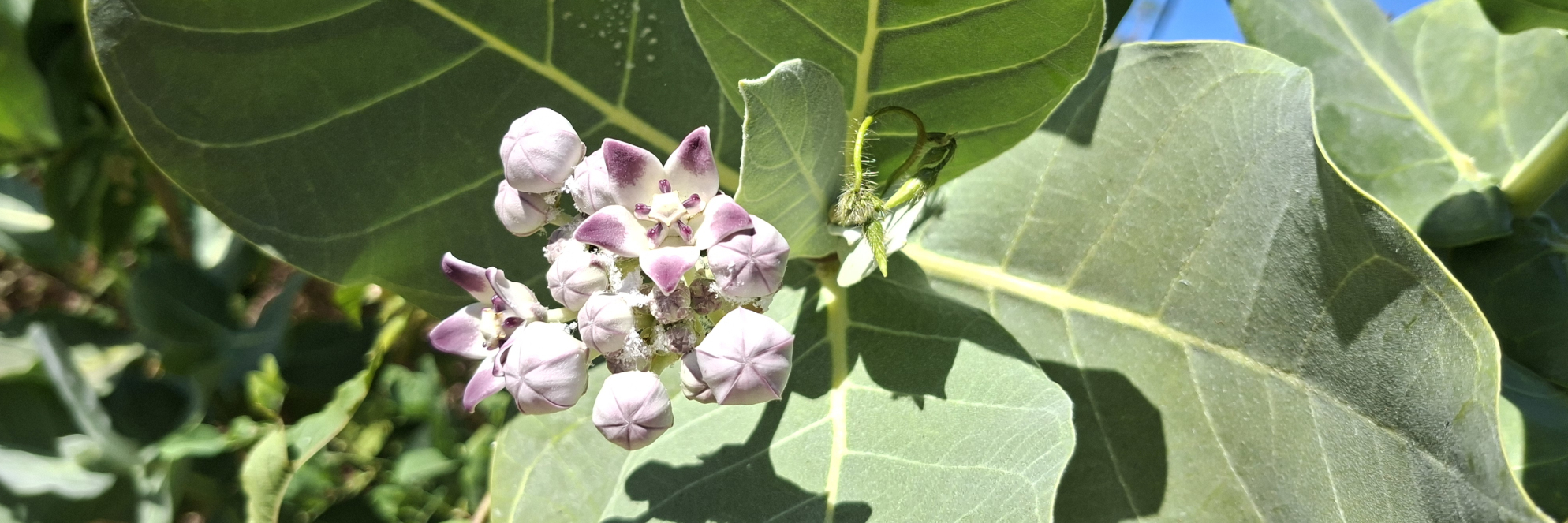

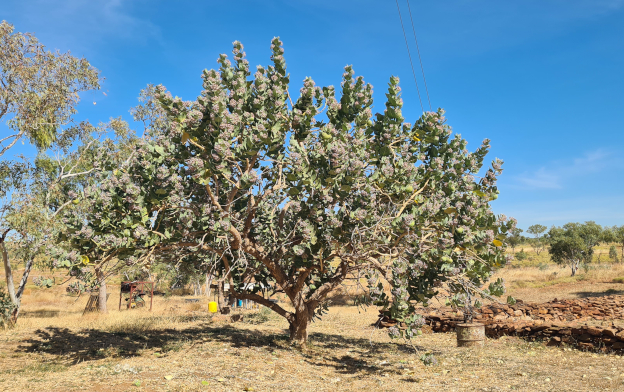
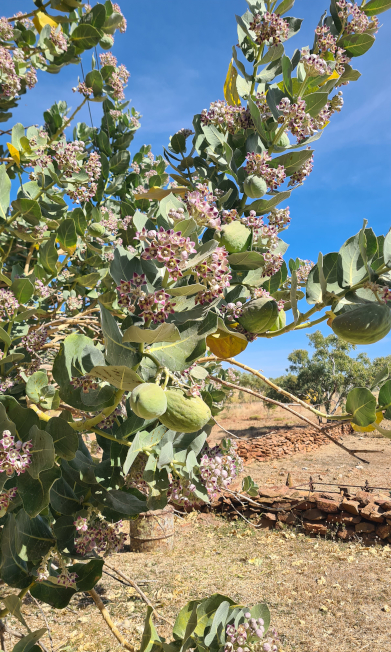
Calotropis procera


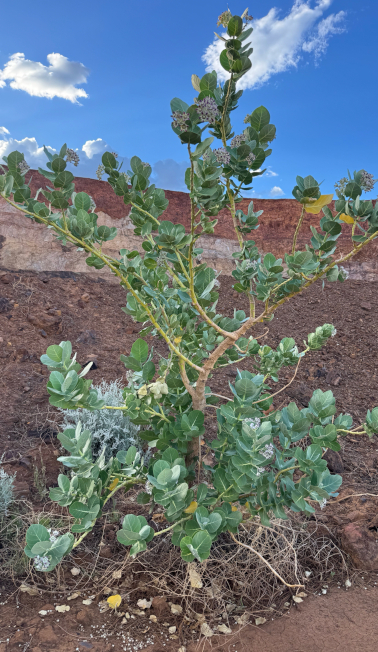
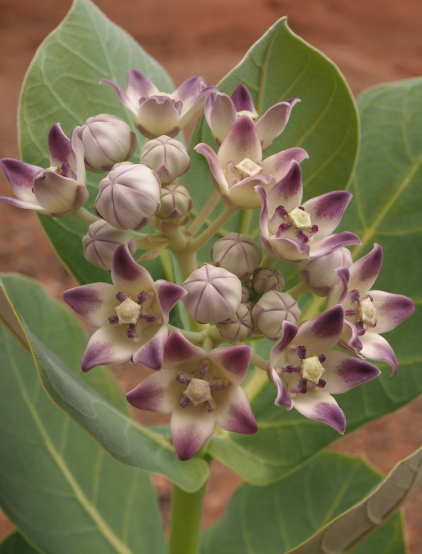
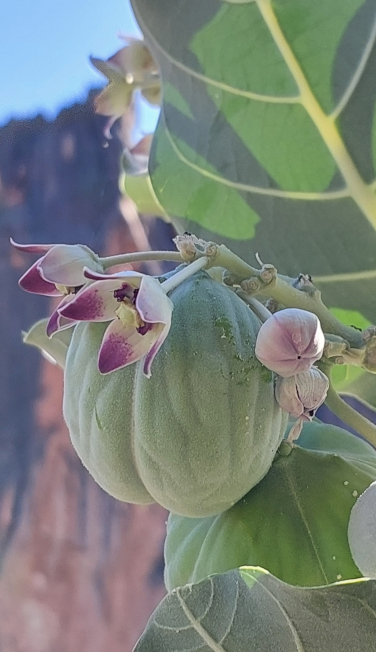
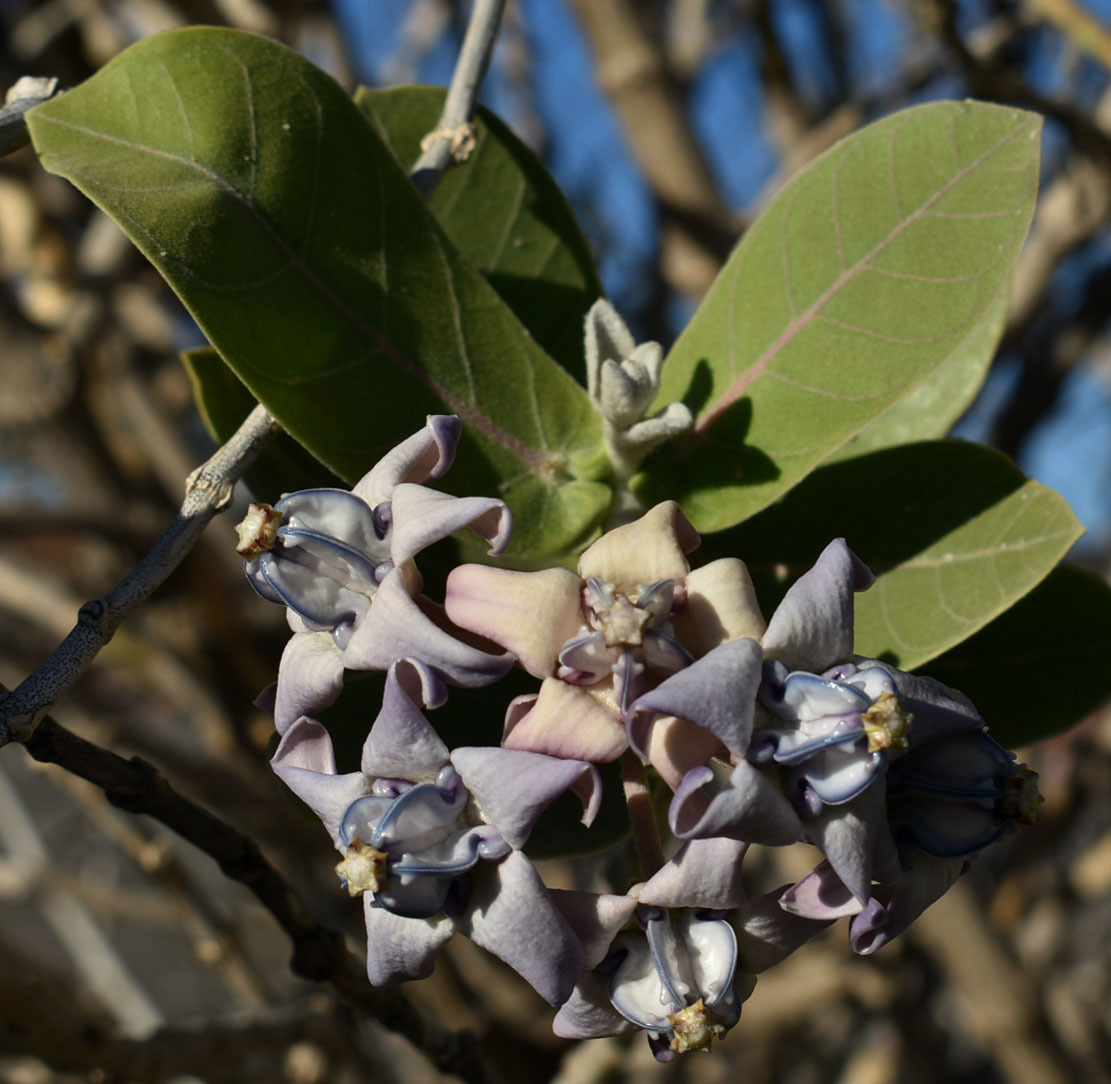
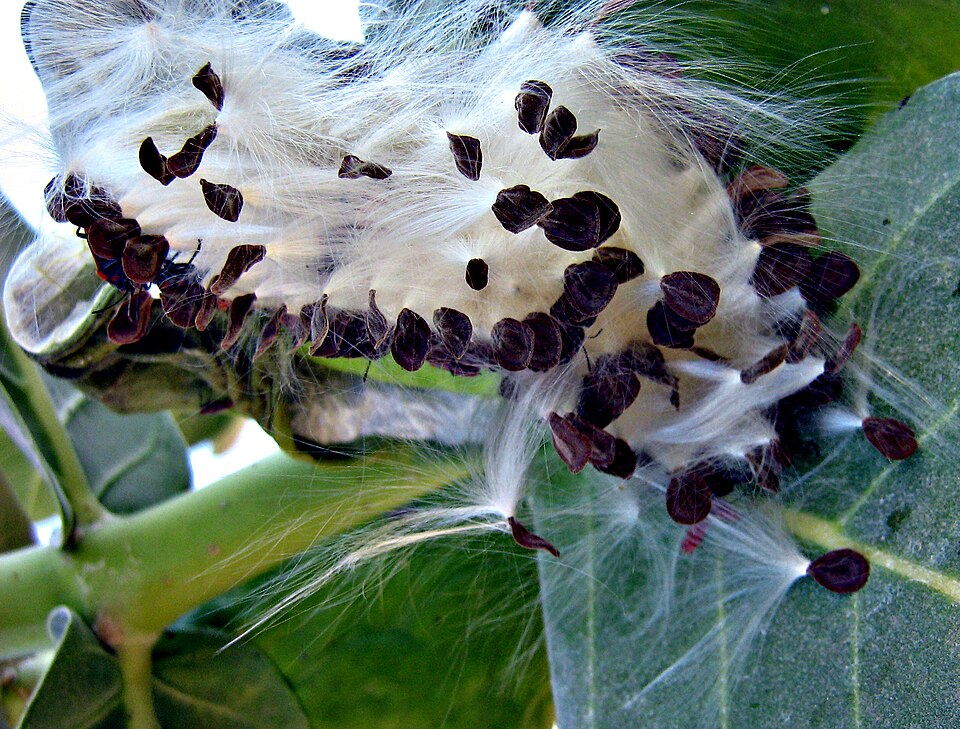
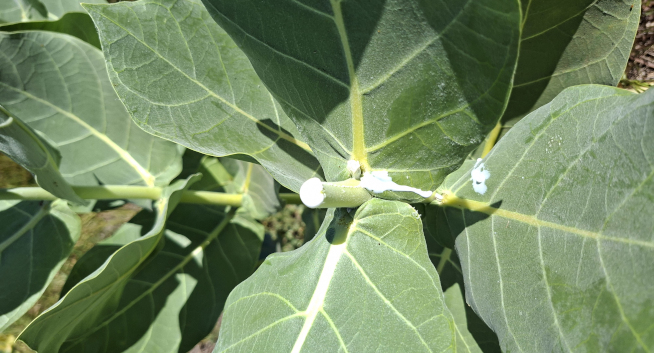
Management options for Calotropis on pastoral properties have been extensively studied but solutions for pastoral properties are not necessarily going to be suitable in bushland. Achieving long-term control remains challenging due to the large size of infestations and the remote nature of many affected areas. Consequently, biological control is highly desirable as a sustainable and cost-effective long-term management solution.
Calotropis is deep rooted and can regrow from damaged or broken roots. Hand removal may only be successful for seedlings.
Several herbicides can be applied as a foliar spray, or by using the cut stump and basal bark methods. However, latter method requires more labour demanding.
Foliar spray with Metsulfuron methyl 600 g/kg or Imazapyr 240 g/L can be sprayed on seedlings or young plants. Metsulfuron methyl at 12g/100L or Imazapyr at 125g/100L of water during while plants are actively growing. Avoid the application when plants are stressed. Rainfall within two hours after the chemical application can make the control less effective. Success is highly variable, and 15-20% regeneration the following year is to be expected.
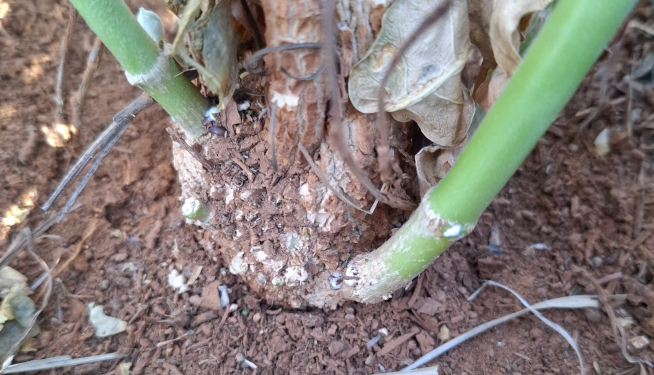
Cut stump method using Triclopyr 240 g/L + Picloram 120 g/L can successfully control Calotropis as long as chemical is applied within 15 seconds of cutting. Cut stumps <25mm with tree loppers or >25mm with a chainsaw. Using a rate of 1L/60 L diesel (or biodiesel), apply the herbicide by basal bark application so the whole residual stem is covered, and herbicide reaches the "shake" a crack or indentation in the stem close to the ground surface. Species with rough corky bark require more thorough wetting than smooth barked species.
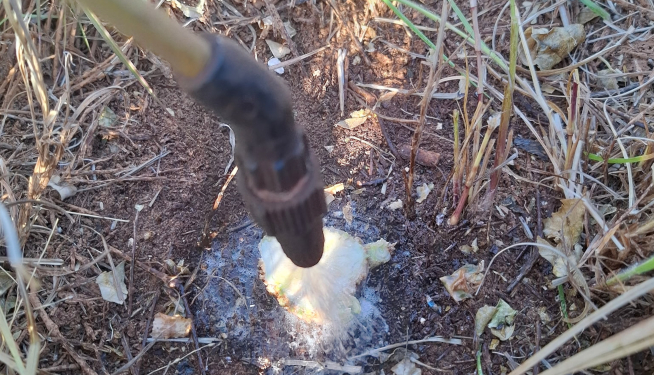
Tebuthiuron 200 g/kg at 1.5–2g per m2. Sprinkle evenly over the ground in mature dense stands. This is a soil residual herbicide and care needs to be taken to ensure its not applied in water catchment areas or likely to move with surface run off. This herbicide may only be effective in areas where there is sufficient rainfall to dissolve the pellets. Not recommended for sloping land or where significant flooding or run-off can wash pellets away.
LSID number: [2891308] | full LSID: [https://id.biodiversity.org.au/node/apni/2891308] | field_lsid: [] | taxon: ["Calotropis procera"]
ALA Reference
 Queensland Department of Primary Industries. (2025)
Fact sheet: Calotrope Calotropis procera. Date accessed 17/4/2026
Csurhes, S. (2016)
Risk Asessment: Calotrope Calotropis procera. Queensland Department of Primary Industries.
Weeds Australia. (2024)
Calotrope, Rubber Bush, Calotropis, Rubber Plant, Cabbage Tree, Kapok Tree, Giant Milkweed, Indian Milkweed, King Edward’s Crown, Small Crown Flower. Accessed on 17 April 2026
Business Queensland
Calotrope. Accessed on 17 April 2026
Herbiguide (2026)
Herbiguide. Accessed 27/7/2026
Queensland Department of Primary Industries. (2025)
Fact sheet: Calotrope Calotropis procera. Date accessed 17/4/2026
Csurhes, S. (2016)
Risk Asessment: Calotrope Calotropis procera. Queensland Department of Primary Industries.
Weeds Australia. (2024)
Calotrope, Rubber Bush, Calotropis, Rubber Plant, Cabbage Tree, Kapok Tree, Giant Milkweed, Indian Milkweed, King Edward’s Crown, Small Crown Flower. Accessed on 17 April 2026
Business Queensland
Calotrope. Accessed on 17 April 2026
Herbiguide (2026)
Herbiguide. Accessed 27/7/2026
| JAN | FEB | MAR | APR | MAY | JUN | JUL | AUG | SEP | OCT | NOV | DEC | Notes | |
|---|---|---|---|---|---|---|---|---|---|---|---|---|---|
| Germination | |||||||||||||
| Active growth | |||||||||||||
| Flowering | |||||||||||||
| Fruiting |
| JAN | FEB | MAR | APR | MAY | JUN | JUL | AUG | SEP | OCT | NOV | DEC | Notes | |
|---|---|---|---|---|---|---|---|---|---|---|---|---|---|
| Foliar spray | |||||||||||||
| Basal bark |


 Permit PER96598 for metsulfuron-Methyl
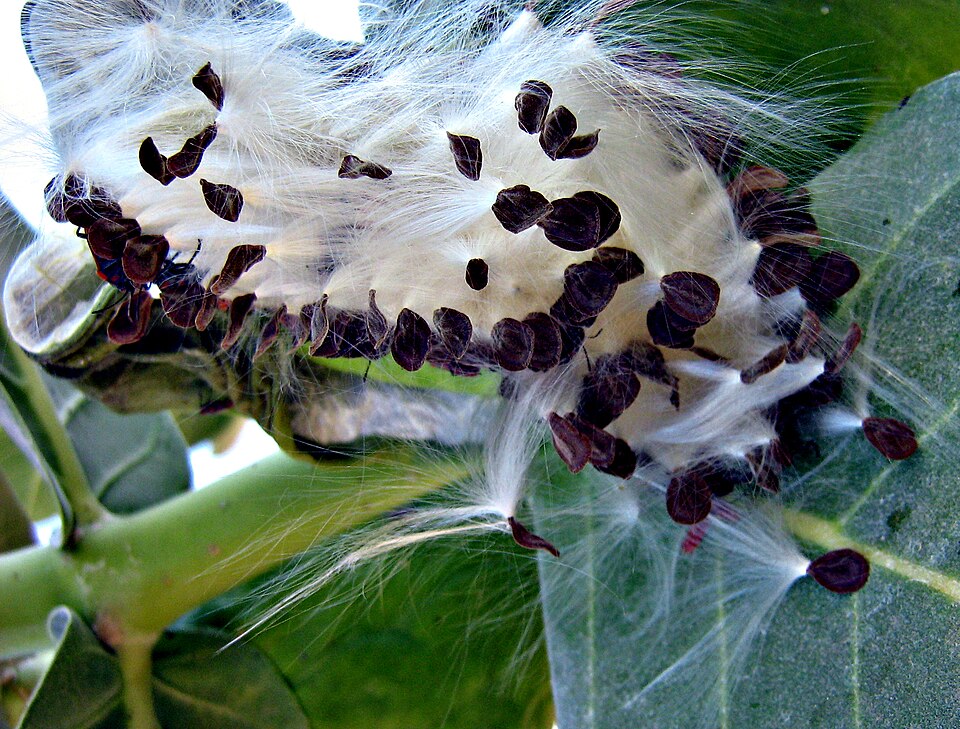
 Seed © Victor Korniyenko